
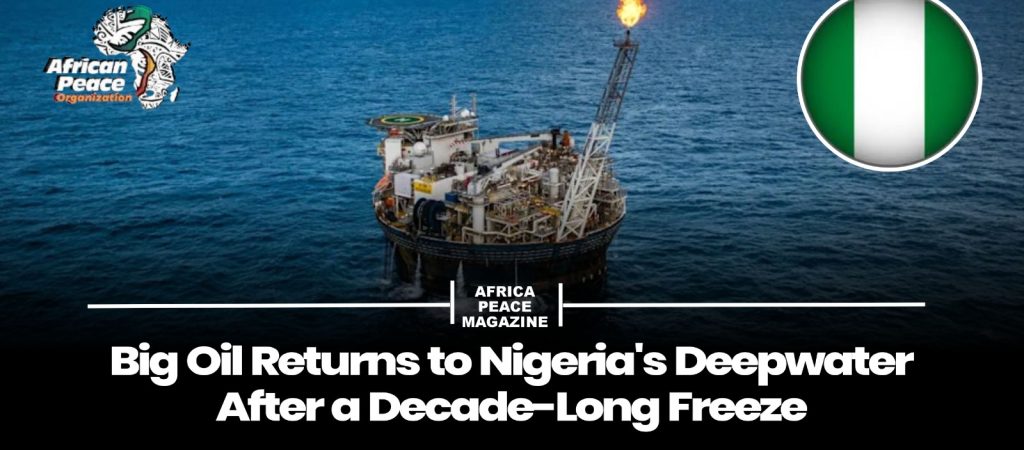
Nigeria’s deepwater oil fields are drawing fresh billions from Shell, ExxonMobil, Eni and TotalEnergies after more than ten years of muted investment, as a sweeping set of fiscal reforms under President Bola Tinubu reignites interest in some of Africa’s most prized offshore acreage. Six legacy offshore contracts between state producer NNPC and international partners were renegotiated in 2022, with further tax incentives introduced in 2024 sweetening terms for any project reaching a final investment decision before 2029. “Operators are responding, advancing deepwater development planning across numerous opportunities,” according to energy consultancy Wood Mackenzie, which has tracked the shift closely through analysts including chairman and chief analyst Simon Flowers, upstream research director Ian Thom and vice chairman Gavin Thompson.
Shell’s approval of the Bonga North project in late 2024, two decades after the field was first discovered, marked what Wood Mackenzie describes as the industry’s turning point. ExxonMobil followed with a $1 billion sanction of its Usan Infill Project, part of a broader $10 billion commitment to its Nigerian deepwater holdings. “Nigeria’s deepwater sector could be on the cusp of a new era,” the consultancy said. The clearest sign of Nigeria’s new posture came when the federal government approved a production-linked tax credit of $11.50 a barrel for Shell’s long-delayed Bonga Southwest Aparo project — more than double the standard incentive under the Petroleum Industry Act. Presidential adviser on energy Olu Verheijen and the Nigeria Revenue Service have confirmed the same pricing buffer will extend to other majors, including Exxon, Chevron and TotalEnergies, for new deepwater infrastructure through at least 2029.
Deal-making has picked up alongside the new approvals: TotalEnergies has agreed to buy Conoil’s 50 percent interest in the Egina South discovery, while Shell has taken a 10 percent stake from TotalEnergies in OML 118 to speed up Bonga Southwest Aparo’s development. Wood Mackenzie estimates a full slate of projects — Bonga Southwest-Aparo, Owowo, Zabazaba, Etan, Preowei, Nnwa-Doro and Bosi, alongside Bonga North and Usan — could add roughly 700,000 barrels a day of liquids and 950 million cubic feet a day of gas at peak output, reversing a decline that saw Nigeria’s deepwater liquids production fall from about 800,000 barrels a day in 2016 to under 500,000 within a decade. Execution risk remains the biggest threat, the consultancy cautioned, citing partner alignment, capital competition, regulatory approvals and supply-chain constraints as factors that could still slow the recovery.
Source: (businessday.ng)