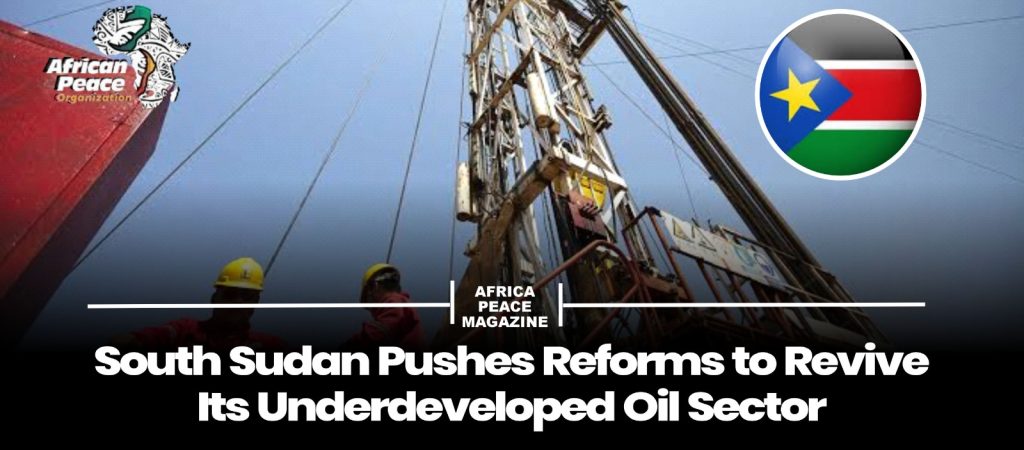
South Sudan is stepping up efforts to attract fresh investment into its energy industry as the government works to rebuild oil production, strengthen domestic fuel security and position the country as one of Africa’s leading frontier energy markets.
South Sudan holds an estimated 3.5 billion barrels of proven oil reserves, making it one of the continent’s most resource-rich yet underdeveloped hydrocarbon markets, and remains East Africa’s only major oil producer. Production is led by national oil company Nilepet alongside joint operating companies including Dar Petroleum Operating Company, Greater Nile Petroleum Operating Company and Sudd Petroleum Operating Company. China National Petroleum Corporation operates Greater Nile Petroleum, while South Africa’s Strategic Fuel Fund holds a 90 percent stake in the Block B2 concession and is evaluating both further exploration and refining opportunities.
Current output stands at an estimated 70,000 to 100,000 barrels a day, with total production between August and November 2026 projected at roughly 8.5 million to 12.2 million barrels. The government wants to lift these volumes by drawing investment into exploration, field redevelopment, storage, transportation and refining, while also addressing chronic domestic fuel shortages, limited power generation and a lack of refining capacity that leaves the country reliant on imported petroleum products despite being a crude producer.
Officials say the priority is reducing barriers to investment through clearer regulatory procedures, faster approvals and more predictable commercial terms, as South Sudan competes with other African markets — including Namibia, Uganda, Senegal, Angola, Nigeria and Côte d’Ivoire — for increasingly selective energy capital. Plans also call for capturing associated gas for power generation instead of flaring it, and for building local content through greater use of domestic contractors, workforce training and technical education. Whether the reforms translate into faster licensing, reliable commercial agreements and projects moving from paper to production will determine if South Sudan can convert its resource base into lasting economic growth.
Source: (vanguardngr.com)