
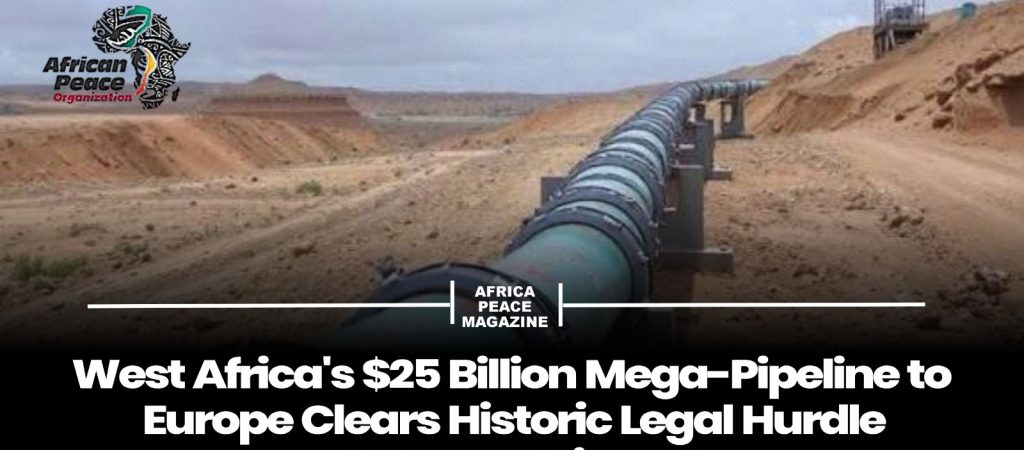
Member states of the Economic Community of West African States have signed an intergovernmental agreement establishing a legal framework for the $25 billion, 6,900-kilometre African Atlantic Gas Pipeline, one of the most significant milestones for the decade-old project since it was first conceived.
The pipeline is designed to carry up to 30 billion cubic metres of Nigerian gas annually along the West African coast to Morocco, with up to 15 billion cubic metres destined for Morocco and European markets via the existing Maghreb-Europe Gas Pipeline. Along the way, it would also supply gas to countries on its route and connect landlocked Sahel nations through regional interconnections.
Amina Ben Khadra, chief executive of Morocco’s national oil company ONHYM, said the agreement establishes a harmonised legal framework defining the rights and obligations of participating states, along with governance, regulatory stability and cross-border cooperation principles. She said the project has moved well beyond the conceptual stage, with FEED studies complete, route reconnaissance finished, and environmental and social studies progressing.
The project’s next steps include finalising signatures from Morocco and Mauritania, establishing a project company in Casablanca and a Pipeline Higher Authority in Abuja, and mobilising investors toward a final investment decision. The push comes as the European Union moves toward a full phase-out of Russian gas imports by autumn 2027, a shift Khadra said strengthens the case for a large-scale, long-term Atlantic supply route as an alternative.
Source: prospect-intel.com