
AFRICA IGNITES ITS ENERGY AND LAND GOVERNANCE FUTURE: WINDHOEK SUMMIT CLOSES WITH BOLD COMMITMENTS
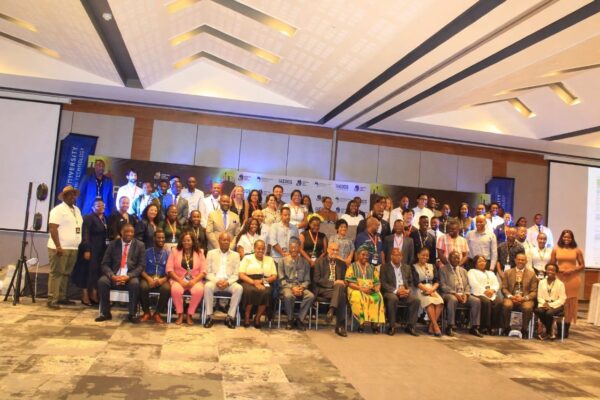
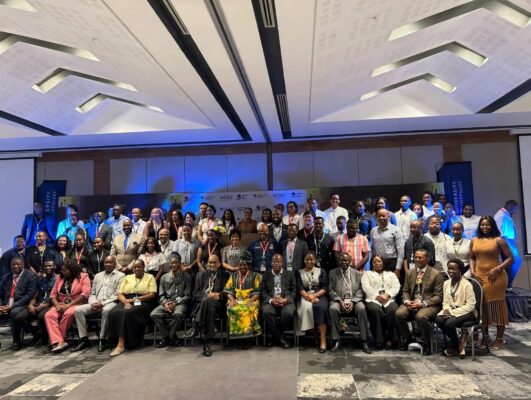
WINDHOEK, NAMIBIA, 6 November 2026. The 5th International African Energy, Oil and Gas Summit (IAEOGS) closed in Windhoek after five days of plenary sessions, technical presentations and bilateral diplomatic dialogue. Held under the theme “Igniting Africa’s Energy and Land Governance Futures,” the summit brought together policymakers, diplomats, academics, industry executives, researchers and community representatives to confront a question at the heart of the continent’s development: who benefits when Africa’s energy wealth is unlocked, and on whose land?
It was the first summit of its kind in Namibia to put land at the centre of the energy conversation.
A Summit with a Different Focus
Opening the programme, Professor Frednard Gideon, Vice-Chancellor of the Namibia University of Science and Technology (NUST), said the summit was deliberately different from the energy gatherings Namibia has hosted before. “Many summits on energy and oil and gas have been held in Namibia this year and in previous years. However, none has focused on land issues,” he said.
He explained the logic of the theme. “The word ‘igniting’ in this Summit’s theme reflects that Africa does not lack energy. It does not lack land. It does not lack ingenuity. What it has too often lacked is the governance, finance, and trust to turn these endowments into affordable, reliable power and secure land rights for its people. This Summit exists to close that gap.”
Professor Gideon stressed that the two challenges cannot be separated. “Energy development without good land governance risks displacement and conflict. Secure rights without electrification leave homes in darkness. These challenges are inseparable.”
He also set a demanding bar for the week. “I hope not a glossy communiqué. I expect at least one or two bankable commitments that we can track through a progress dashboard.”
NUST co-hosted the summit and, as Professor Gideon noted, holds a distinctive place in the field: its Department of Land and Spatial Sciences is the only African university in the Global Land Tool Network and hosts the Network of Excellence on Land Governance in Africa (NELGA), one of only seven institutions endorsed by the African Union as a Centre of Excellence on land governance. The Namibian Energy Institute at NUST serves as the country’s national hub for sustainable energy research, education and policy support.
The summit was organised by International Energy Summits Limited (Nigeria), CRG Research and Consulting Ltd (Namibia), the African Energy Academy Ltd, African Peace Magazine Media, NELGA and NUST’s Institute for Land, Livelihood and Housing. Professor Gideon thanked International Energy Summits Limited and CRG Research and Consulting for co-financing the event, and Professor Uchindu Chigbu, Chair of the Organising Committee, for steering it.
The Challenges: Abundance Beside Poverty
Delegates examined the paradox at the core of Africa’s energy story. The continent holds vast oil, gas, solar, wind and green hydrogen resources, yet over 600 million Africans still live without reliable access to modern energy services.
The summit identified four structural bottlenecks:
- Energy poverty amid resource abundance. Resources are plentiful, but reliable access remains out of reach for hundreds of millions.
- The land governance bottleneck. Approximately 90% of rural and urban land across Africa remains undocumented. Weak registration and ambiguous land rights trigger disputes, delay infrastructure projects and discourage long-term investment.
- Emerging frontiers that demand foresight. Major prospecting in Namibia’s Orange Basin and green hydrogen initiatives in Lüderitz offer immense promise, but require proactive planning to protect areas such as national parks, shield communities from soaring property values and ease housing shortages in urban and informal settlements.
- Leadership deficits. Transactional institutional and business leadership models are increasingly ineffective in managing resource governance, disruption from Artificial Intelligence and volatile, uncertain, complex and ambiguous (VUCA) market conditions.
Nigeria’s Message to Namibia: Learn from Seventy Years of Oil
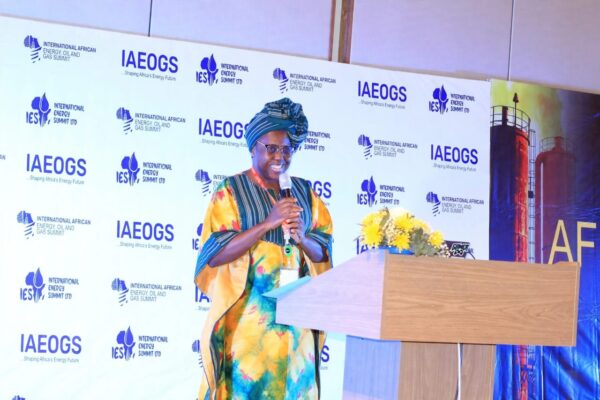
The summit’s most closely watched address came from Her Excellency Esther Adebola Arewa, High Commissioner of the Federal Republic of Nigeria to Namibia, who delivered the keynote, “Nigeria and Namibia: Now and in the Future.”
A friendship written into the map
Ambassador Arewa opened by tracing the bond between the two nations to the anti-apartheid struggle. “The friendship between our two countries is not only written in treaties. It is written into the map of this city,” she said, referring to General Murtala Muhammed Avenue, where Nigeria’s High Commission stands. She recalled that between 1976 and 1994 five Nigerian diplomats chaired the United Nations Special Committee against Apartheid, and that Nigeria set up the Southern Africa Relief Fund in 1976, to which civil servants gave part of their salaries and, in her words, “students skipped meals to contribute.” She also offered condolences on behalf of the Government and people of Nigeria on the passing of Madame Penehupifo Pohamba.
Quoting Namibia’s Founding President Sam Nujoma, she reminded delegates that political freedom without economic independence would remain “insufficient and meaningless.” That unfinished economic struggle, she said, is exactly what the summit is about.
An honest accounting
The High Commissioner did not shy away from the gap between history and present reality. Nigeria and Namibia’s Joint Permanent Commission did not meet between 2010 and February 2025. In 2023, Namibia sold Nigeria about eleven million US dollars’ worth of goods, mostly salt, while Nigeria sold Namibia less than two million. “Two countries with nearly a quarter of a billion people between them did about thirteen million dollars of business in a whole year,” she said. “That is not yet a trading relationship. It is a courtesy.” With no direct flight since Air Namibia closed in 2021, she concluded: “What we lack is movement: of goods, people, students, capital and ideas, in both directions.”
Four lessons from the field
Declining to comment on Namibia’s negotiations with its partners, Ambassador Arewa instead shared Nigeria’s experience, “some of it we are proud of, some of it we would do very differently,” as Namibia stands where Nigeria stood after the Oloibiri discovery.
- Nigeria burned much of its associated gas for decades. Flaring is now down to about seven per cent, nearly 93 per cent of gas produced in the first half of 2026 was put to use, and reserves stand at about 215 trillion cubic feet, the largest in Africa. Her message: associated gas is a hard question in the Orange Basin, and Nigerian expertise is available to Namibia.
- Nigeria debated a comprehensive petroleum law for more than a decade before the Petroleum Industry Act of August 2021. “Investors waited. Some of them left. Certainty, even imperfect certainty, is worth a great deal.”
- Local content. Nigerian content rose from about 26 per cent in 2016 to about 61 per cent this year, with a target of 70. “That did not happen through slogans,” she said, crediting a dedicated regulator, a fund, industrial parks, training and patience. She welcomed Namibia’s Cabinet approval of its National Upstream Petroleum Local Content Policy on 4 August.
- Land and community. Oil is always found under somebody’s land or off somebody’s coast. At Oloibiri, she said, there is a rusted derrick and a community that feels it gave the nation a great deal and received too little back. Only with the Petroleum Industry Act did Nigeria legislate that companies must place three per cent of annual operating costs into host community development trusts. “We should have done it fifty years earlier.”
Her counsel to Namibian policymakers was direct: “Decide now, before the first barrel, how the people of ǁKaras and the coastal towns will share in this, and write it down.” And then: “It is far cheaper to build trust before production than to buy back peace afterwards.”
Protecting what is built
On critical infrastructure, she noted that pipeline theft and vandalism helped drag Nigerian output down to about 1.1 million barrels a day in 2022. Output has since recovered above 1.7 million barrels a day, as pipelines, power lines, rail and telecom masts came to be treated as critical national assets, with communities as partners. At sea, she said Nigeria’s Deep Blue Project has delivered four years without a reported piracy incident in Nigerian territorial waters. Her advice to Namibia: “Plan their protection now, on land, at sea and in cyberspace, and make the communities partners from the first day.”
Refining and minerals
Ambassador Arewa described Nigeria’s long contradiction of exporting crude and importing petrol, now changing with the Dangote refinery, which reached its full 650,000 barrels a day capacity in February and has begun exporting petrol to African neighbours. She was candid about modular refineries: about thirty licensed, five completed, and only three running in the first half of the year. Success, she said, needs reliable crude supply, patient finance and technical capacity. With Namibia importing about 1.1 billion litres of fuel a year, roughly 19,000 barrels a day, she suggested the modular model deserves study, while stressing the decision belongs to Namibians. She also noted that Dangote Industries Namibia has begun the environmental approval process for a 1.6 million-barrel fuel storage terminal at Walvis Bay.
On solid minerals, she reported government revenue growing from about 16 billion naira in 2023 to close to 70 billion in 2025, the revocation of more than 2,500 dormant licences, the creation of the Mining Marshals, and a lithium processing plant in Nasarawa State, able to handle 6,000 tonnes of ore a day, opened in July as the largest in West Africa. Noting Namibia’s June 2023 ban on exporting unprocessed critical minerals, she said the two nations are on the same side of the key argument in African mining: “Africa should sell finished value, not holes in the ground.”
Six things to build together
The High Commissioner closed with a practical agenda:
- People before projects. Revive the Technical Aid Corps for petroleum engineers, geoscientists, metallurgists, safety and environmental specialists, lawyers and accountants, and open exchanges between Nigerian institutions and NUST, including its Lüderitz campus.
- Regulator to regulator. Exchanges between upstream, local content and mining regulators, NAMCOR and NNPC, and security agencies. “This does not need a summit. It needs a memorandum and a budget line.”
- Make agreements work. “I will press for every agreement we hold to be used, not filed. A signature means nothing until a ship is loaded.”
- Connect our skies. Update the bilateral air services agreement and launch a Lagos to Windhoek route. “Every direct flight is a trade mission that leaves twice a week.”
- African money for African energy. Bring Namibian projects and firms onto the books of the Africa Energy Bank, being set up by the African Petroleum Producers’ Organization with Afreximbank and headquartered in Abuja.
- Trade that runs both ways. Open the Nigerian market of more than two hundred million people to Namibian beef, fish, salt, grapes and dates under the African Continental Free Trade Area, through a joint trade and investment mission.
Her closing words framed the stakes. “Political friendship can be built on a common cause. Economic partnership has to be built on common interests, signed contracts, delivered goods, protected infrastructure and trained people. It is slower work, and much less glamorous. Nobody names a street after a trade agreement.”
The Resolutions: Three Pillars
The African Peace Organization and summit stakeholders adopted resolutions organised around three pillars.
Pillar 1: Equitable Energy Transition and Clean Energy Financing
- Operationalise carbon markets. Governments and financial institutions should accelerate result-based carbon credit registries under Article 6 of the Paris Agreement, using carbon revenue as a bankable asset to derisk renewable energy infrastructure.
- Community-centric renewables. Mini-grids and community solar PV plants must meet strict standards of affordability, local technical capability for long-term maintenance, and equitable engagement of women and youth.
- Sustainable spatial planning. Green hydrogen hubs and mega-investments must balance industrial needs with local biodiversity, agricultural land and community water security.
Pillar 2: Transparent and Transformative Land Governance
- Fast-track land documentation. African nations must update and digitise legal and administrative frameworks to map and document the remaining 90% of unregistered land.
- Community consultation frameworks. Energy projects must formally mandate independent Community Development Agreements, standardised benefit-sharing mechanisms and community-controlled development committees to secure local consent and prevent conflict.
- Proactive urban planning. Local authorities facing energy-boom population inflows should use comprehensive spatial geodatabases to upgrade informal settlements, counter property hyper-inflation and introduce equitable housing densification.
Pillar 3: Local Content, Capacity Building and Regional Cooperation
- Regional skills architecture. Strong support for reviving and expanding the Technical Aid Corps and skills exchanges between established producers like Nigeria and emerging frontiers like Namibia.
- Direct continental connectivity. Aviation and transport authorities are urged to modernise bilateral air service agreements and establish direct flights between major economic nodes such as Nigeria and Namibia.
- Financial sovereignty. African developers, energy firms and state enterprises are encouraged to integrate into the upcoming Africa Energy Bank.
- Institutional human capital. Public-private partnerships among academia, local authorities and the private sector to deliver internships, vocational training and leadership development aimed at empowering 15,000 Africans.
Next Steps
To turn resolutions into measurable outcomes, the summit designated three immediate actions:
- Call for research. A call via NELGA Southern Africa for localised research on the relationship between land management and energy deployment, with a dedicated special issue of the Journal of Land Use Policy.
- Regulatory exchanges. Immediate practical exchanges between upstream local content regulators, mining authorities and national energy companies across the continent.
- Joint trade missions. Coordination of joint multi-sectoral trade and investment missions over the coming year, focused on the nexus of energy, mining and agriculture.
Why It Matters
The Windhoek summit set a clear tone: Africa’s energy future will be judged not by the size of its discoveries but by the fairness of its land rights, the strength of its institutions and the depth of its partnerships. Professor Gideon asked for commitments that can be tracked on a dashboard; Ambassador Arewa asked for agreements that move ships and planes. The communiqué now places both demands on the record.
Acknowledgments
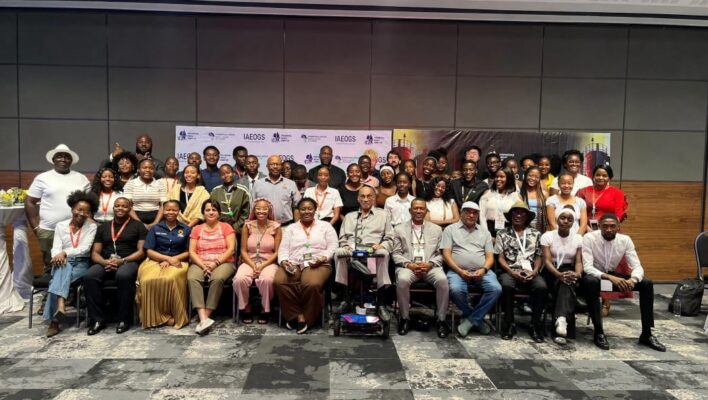
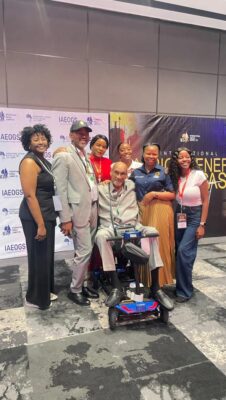
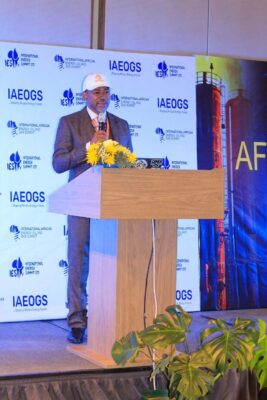
The organising team expressed profound gratitude to the Government and people of the Republic of Namibia for their warm hospitality, and commended the co-programme directors, partners, international delegates and student volunteers whose dedication ensured the success of the summit. Notable participants included Noah Ajare, CEO of International Energy Summits; Professor Uchindu Chigbu, expert in land administration and Chair of the Organising Committee; Dr Philip Mubanga; Professor James Katende; and Prof. Lloyd Williams, among other experts from NUST, NELGA from many others.
Issued in Windhoek, Namibia, 6 November 2026.
Media enquiries: Africa Peace Magazine Media.